






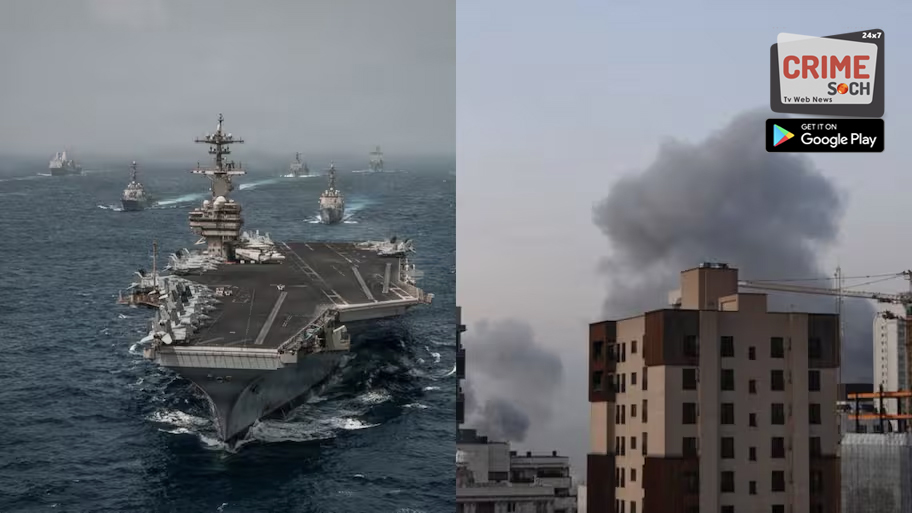
The Middle East saw a sharp rise in tensions on Wednesday after the United States resumed naval blockade measures against vessels travelling to or from Iranian ports and carried out two waves of strikes on Iranian military capabilities. The US Central Command (CENTCOM) said the strikes targeted Iranian military capabilities used to threaten vessels transiting the Strait of Hormuz. Iranian officials reported explosions in several southern cities and warned that Tehran could respond against US bases in the region.
Quick look: 24-hour timeline of escalation
Tuesday
- Iranian ports and coastal areas: US forces resumed naval blockade measures against vessels travelling to or from Iranian ports and coastal areas.
Wednesday, 7:30 am ET
- Strait of Hormuz region: CENTCOM completed its first wave of strikes.
Wednesday, 3:00 pm ET
- Southern Iran (including areas near Ahvaz, Chabahar and Qeshm): CENTCOM launched a second wave of strikes against Iranian military capabilities used to threaten shipping in the Strait of Hormuz.
Wednesday (local time)
- Arabian Gulf near Kharg Island route: US forces disabled an unladen oil tanker, the Curacao-flagged M/T Belma, after it ignored multiple warnings to stop while attempting to sail toward an Iranian port.
US enforces blockade after tanker ignores warnings
During the first 24 hours of the renewed blockade, US forces interacted with three commercial ships travelling to or from Iranian ports. Two vessels followed instructions and changed course. A third ship was stopped by force.
According to CENTCOM, the Curacao-flagged oil tanker M/T Belma was sailing through international waters toward Iran’s Kharg Island. The US said the vessel ignored repeated warnings to turn back.
“A U.S. aircraft disabled the vessel after firing Hellfire missiles into the ship’s smokestack. The ship is no longer transiting to Iran,” CENTCOM confirmed, adding that US forces remain ready to enforce the blockade.
CENTCOM carries out two waves of strikes
The US Commander in Chief directed a series of strikes to hold Iran accountable for capabilities threatening shipping in the Strait of Hormuz. The second wave began at 3:00 PM ET on Wednesday. CENTCOM said the targets were Iranian military capabilities used to threaten vessels transiting the Strait of Hormuz, an international waterway vital to global commerce.
After the strikes, Iranian state media and local officials reported explosions and damage in several areas of southern Iran.
Explosions reported in Ahvaz, Qeshm and Chabahar
Ahvaz: Hossein Kermanpour, spokesperson for Iran’s Ministry of Health, said areas near Boghayi Hospital 2, a cancer treatment hospital, were hit by a missile attack. The loud explosion caused panic. Patients and family members fled the hospital; only the most critical patients remained inside.
Qeshm Island: Iran’s state broadcaster IRIB said the Souza fish powder factory was hit. The Governor of Hormozgan said the building suffered limited damage. No one was injured because the factory was empty.
Chabahar: Local residents reported explosions. Iranian state media has not confirmed whether they were caused directly by US strikes.
Iran warns of possible retaliation against US bases
Iran’s Islamic Revolutionary Guard Corps said it is preparing for a longer conflict and that its focus has shifted toward US military positions in the region.
IRGC spokesperson Brigadier General Hossein Mohammadi issued a warning on social media. He said Iran would not allow the conflict to become a long war of attrition.
“Iran’s operations are currently focused on destroying America’s offensive infrastructure in the region. The next steps will then begin,” Mohammadi warned.