









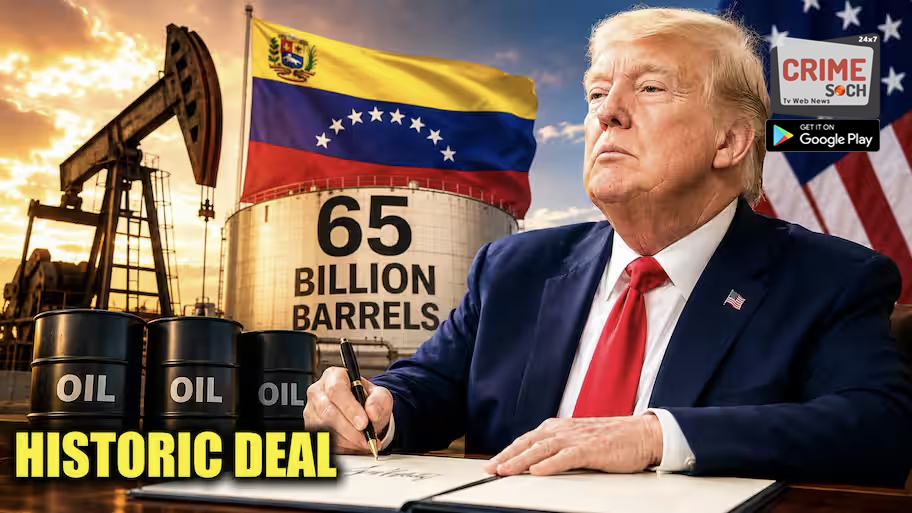
President Donald Trump has announced an unprecedented agreement where the United States will gain majority control of over 65 billion barrels of proven crude deposits in Venezuela.
The deal has been negotiated between the United States and Caracas with the aim of delivering stable, inexpensive crude to American refineries without utilizing taxpayers’ money.
The announcement of the deal is made on social media platforms, which is going to involve coordination between top administration officials and private energy firms, as well as interim Venezuelan leadership.
Details of the energy deal structure and claims
Though the administration boasts of enormous benefits, the specific structure of the deal remains vague.
Administration directives: The negotiation process was led by Secretary of State Marco Rubio and Secretary of War Pete Hegseth in collaboration with interim President of Venezuela, Delcy Rodriguez.
Projected investment: According to Rubio, the agreement could lead to a $100 billion investment of private capital in Venezuela and the generation of many well-paid jobs and infrastructure revival.
Current oil production inefficiency: Even though Venezuela has the largest proven oil reserves in the world, it is currently producing only 1.25 million barrels a day due to inefficient management, sanctions, and lack of investments.
Energy market experts’ skepticism and constitutional barriers
From the very beginning, energy market experts and lawyers pointed to the major barriers connected with the functioning of the lease model backed by the government.
Barriers related to constitution: The Constitution of Venezuela does not allow any foreign entities to control hydrocarbons of the country, which means the lease model will face legal obstacles in the beginning.
Infrastructural issues: It will take years of work to revive outdated Venezuelan oilfields that have heavy crude. Thus, it may not have an effect on the current domestic gasoline prices in America.
Unanswered questions: Administration has not provided details about private companies, locations of the oilfields, and the way of ensuring US majority control.
Geopolitical motivation and domestic pressures
The timing of the announcement is largely motivated by the domestic issues connected with the coming midterm elections and people’s concern about energy prices.
The administration’s attempt to get larger access to the crude supplies of the Western Hemisphere is aimed at protecting US refineries from possible shocks in other parts of the world. Whether this diplomatic initiative will be successful considering local constitutional barriers and infrastructure inefficiencies is questionable.