


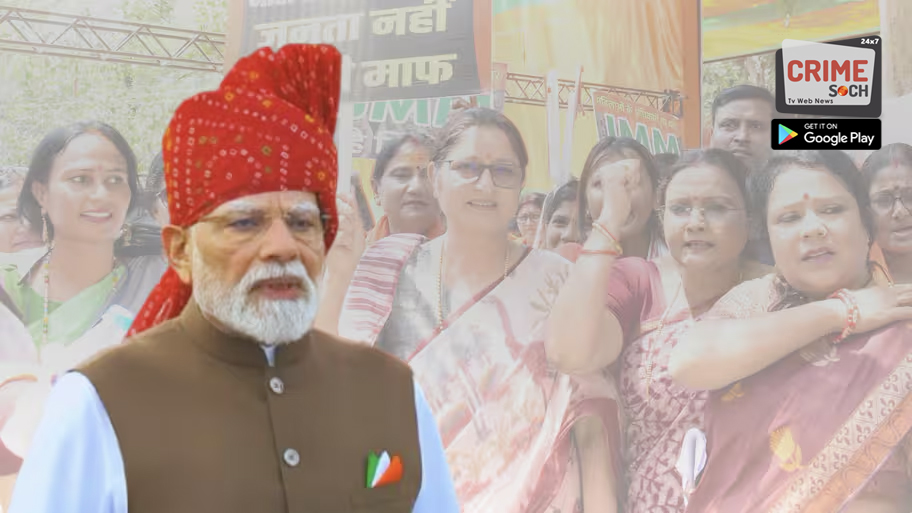
In his Independence Day address, PM Modi called for 33 per cent representation for women in State Legislative Assemblies and the Lok Sabha, saying women must have a greater role in shaping the country’s policies.
“Standing here today beneath the Tricolour on the ramparts of the Red Fort, I appeal to and urge all the political parties of the country: come, become champions of women’s empowerment. Step forward to honour women and ensure that our mothers and sisters secure 33% representation in the Legislative Assemblies and the Lok Sabha as soon as possible. Let them contribute to shaping India’s policies. This is the need of the hour, and I once again urge all political parties: come, join in honouring women by implementing women’s reservation. You may take the credit, you may claim the accolades, but please grant our mothers and sisters their due rights,” said PM Modi.
His appeal came with a direct message to political parties: they may take the credit and claim the accolades, but they should ensure that India’s mothers and sisters get their rightful political representation.
“Come, become champions of women’s empowerment,” Modi said, urging parties to move ahead with the implementation of women’s reservation.
The Prime Minister also pointed to the growing role of women in local governance. He highlighted how women representatives in Panchayats, Municipalities and Municipal Corporations are leading from the front, addressing local problems and providing capable leadership.
Modi recalled the passage of the Nari Shakti Vandan Adhiniyam in 2023, which sought to reserve one-third of seats in the Lok Sabha and State Legislative Assemblies for women. He said the idea of greater political representation for women had remained caught in political battles for decades.
“Let them contribute to shaping India’s policies. This is the need of the hour,” Modi said from the Red Fort.
The Prime Minister’s renewed push comes against the backdrop of the stalled implementation of the women’s reservation law. The Constitution (131st Amendment) Bill, linked to the implementation of the 33 per cent quota and delimitation, could not secure the required two-thirds majority in the Lok Sabha on April 17.
For Modi, however, the issue is bigger than political credit. He framed women’s representation as a matter of rights and national progress, urging parties to work together so that women can play a stronger role in deciding the country’s future.
His Independence Day message placed women’s political empowerment firmly at the centre of the broader vision of a stronger and more representative India.