







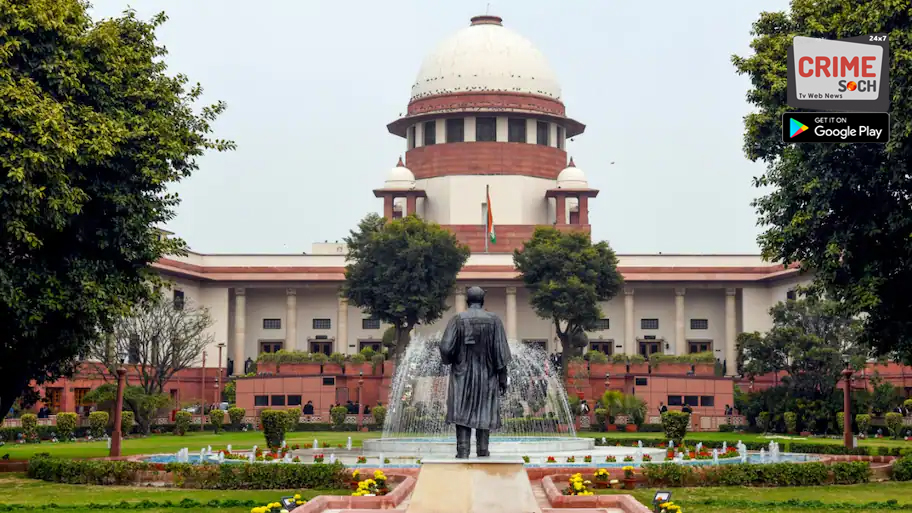
The Supreme Court of India on Thursday dismissed an appeal lodged by the Tamil Nadu government against a Madras High Court judgment holding that individuals who convert to Islam do not qualify for Backward Class (BC) reservations on account of their pre-conversion caste identity.
Social backwardness cannot be carried forward post conversion
In its verdict, the Supreme Court ruled that affirmative action under Article 16(4) of the Constitution cannot be claimed exclusively on account of social backwardness of the individual linked to his/her Hindu antecedent status once he/she converts to a non-Hindu religion.
“Backwardness suffered in the antecedent social order cannot by itself be carried forward so as to confer upon him the status of a backward class in the religion to which he has converted,” stated the bench headed by Justices PK Mishra and Shree Chandrashekhar.
It further added that as per Paragraph 3 of the Constitution (Scheduled Castes) Order, 1950, the Scheduled Caste status can only be given to individuals who have faith in Hinduism, Sikhism or Buddhism.
Background of the Tamil Nadu government order dispute
The controversy revolves around a Tamil Nadu State Government Order released on March 9, 2024. The GO authorized people who convert to Islam from BC, MBC, denotified communities, or SC to be provided with community certificates from any one of the seven recognized sects of Muslims in backward communities, which include ‘Muslim Lebbai.’
In its defense, the State government stated that the order aimed at safeguarding the right to conversion without denying the person the social benefits of such castes. Nevertheless, the Madras High Court invalidated the GO on June 25, stating that doctrines of Christianity and Islam do not have caste systems, and therefore such converts cannot claim their caste identity as Hindus.
Dismissing of individual writ
This High Court ruling was as a result of a petition filed by Sameer Ahamed, who converted to Islam in 2015 and was applying for ‘Muslim Lebbai’ community certificate through the 2024 Government Order. His application was turned down by the Tehsildar, and hence he filed a writ petition which resulted in the cancellation of the state government order.
With the Supreme Court’s dismissal of the Tamil Nadu government’s appeal, the Madras High Court judgment declaring the 2024 Government Order unconstitutional now stands finalised.