









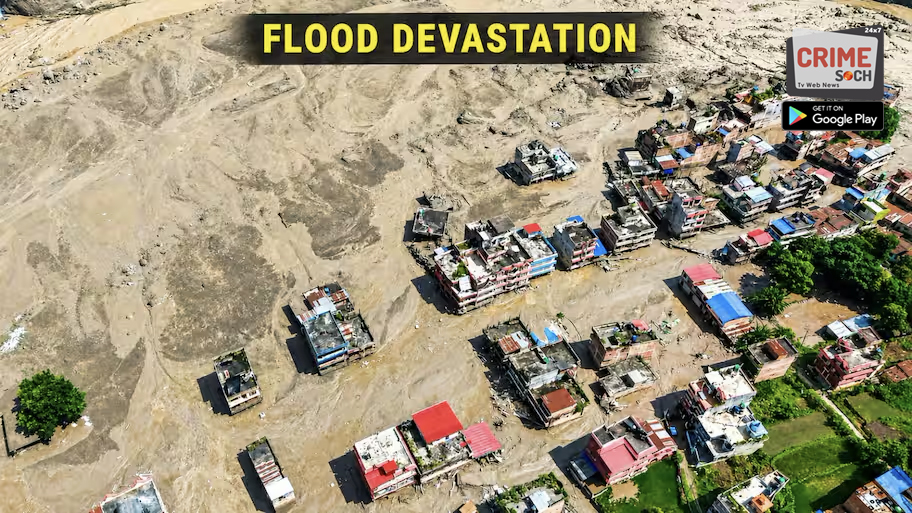
The disastrous flood caused by a huge landslide in the Tibetan mountains led to destruction in the northern valleys of Nepal. The debris and floodwaters rushed through the Bhotekoshi river valley, killing many people and causing huge economic damage, including loss of infrastructure, buildings, and hotels. According to unofficial reports, at least 140 Indian tourists heading to Mansarovar went missing.
These are five of the most affected areas, which had to endure the consequences of the terrible natural disaster.
1. Rasuwagadhi and Timure Bazaar: Ground zero at the border
The Rasuwagadhi-Timure corridor is the first territory that experienced direct influence of the wall of water and stones coming from Tibetan borders.
Infrastructural damage: The Historic Miteri Friendship Bridge was entirely washed away by the floodwaters.
Economic damage: Timure customs offices were buried under layers of mud together with imported electric cars and containers.
2. Syabrubesi: Multi-story hotels and lodges destroyed
Syabrubesi is a small mountain town popular with tourists visiting the Langtang Valley.
Touristic infrastructural damage: Over 60 multi-story hotels, lodges, and housing buildings were destroyed due to the powerful impact of boulders and floodwaters.
Obstacle for rescue activities: Local landslides badly damaged the military helicopter airport, making search and rescue activities extremely difficult.
3. Trishuli Bazaar and Betrawati: Covered with mud
After merging into the Trishuli River system, the floodwaters continued their way at a speed of 70 km/hour.
Silty inundation: Floodwaters entered the homes, bringing layers of six to eight feet of very viscous mud.
Refuge on the rooftops: Ground floors were covered with mud; people were forced to get to the rooftops in order to escape danger.
4. Galchhi corridor: Important road link damaged
The Galchhi corridor in the Dhading district is a vital road link for Kathmandu with other parts of Nepal.
Landslides: Raging waters caused over 50 landslides along the ten-kilometer stretch of road.
Infrastructure damage: Nineteen concrete bridges collapsed, creating barriers for the northern part of Nepal and stopping emergency aid trucks.
5. Chitwan and Gorkha: Lowlands affected by flood waters
The destructive force of the floodwaters affected lowland territories of the Chitwan and Gorkha districts after Trishuli river got flooded.
Evacuations: Residents of rural farming villages and riverbank areas had to evacuate their properties and livestock due to an unexpected flood at night.
Mud and debris deposits: Huge amounts of mountain mud and debris are constantly deposited to agricultural land.
Heavy hit for 13 hydropower plants
Beyond residential and transport losses, Nepal’s energy grid took a devastating hit. Roughly 13 hydropower facilities—including Chilime, Rasuwagadhi, and Trishuli-3A—suffered severe structural damage. Powerhouses and transmission systems remain choked with mud.
While India has dispatched an initial shipment of 10 tons of emergency relief material, local authorities face an uphill battle to restore communication lines, clear blocked mountain passes, and locate missing survivors.