





India’s ambitious high-speed rail network crossed a major manufacturing milestone as Union Railway Minister Ashwini Vaishnaw announced that the country’s first bullet train body frame and test coach are fully ready. Speaking at the ‘NaMo for Viksit Bharat’ event in Vadodara, Gujarat, the minister highlighted that civil infrastructure and rolling stock production are running on an accelerated timeline, with track testing scheduled to begin next year.
The landmark milestone highlights rapid advancements in domestic railway engineering, promising a swift one-and-a-half-hour travel window between Vadodara and Mumbai.
High-speed corridor progress and operational timelines
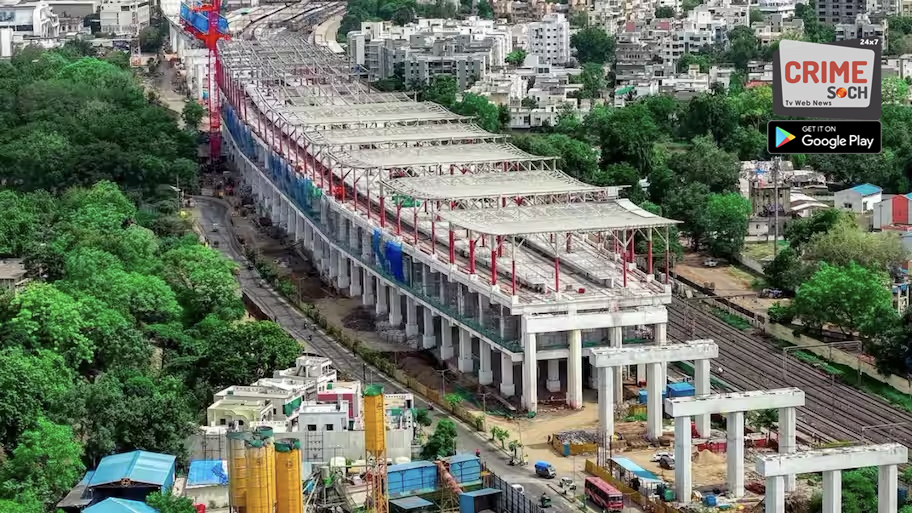
Construction on the flagship Mumbai-Ahmedabad high-speed rail corridor is advancing across multiple sectors, with initial operational stretches nearing completion.
Testing schedule: The bullet train will debut on testing tracks by May or June next year, leading to a presidential or ministerial inauguration two to four months post-trials.
Surat-Vapi milestone: Civil construction across the critical Surat-Vapi section is slated to wrap up by December of this year.
Vadodara-Mumbai connectivity: The high-speed link will drastically cut transit times, enabling passengers to commute between Vadodara and Mumbai in just 90 minutes.
Broad modernisation across Indian Railways
Minister Vaishnaw emphasised that the high-speed initiative forms part of a massive, multi-faceted overhaul of national transport infrastructure.
System overhauls: Ongoing reforms target legacy operating systems, outdated reservation frameworks, and traditional construction protocols.
Freight innovation: Customised wagon configurations—including specialized designs built for salt transportation—are modernizing freight logistics.
Cargo expansion: Manufacturing pipelines are currently advancing Vande Bharat-technology cargo trains to accelerate freight transit.
Record-breaking track additions and infrastructure milestones
The national rail network has expanded exponentially over recent years despite pandemic-related disruptions.
Network growth: The administration has successfully laid 36,000 kilometers of new tracks while completely redeveloping 280 railway stations nationwide.
Engineering marvels: Long-pending logistical challenges were overcome with the completion of major connectivity projects, including the Chenab Bridge and the rail link integrating Mizoram.
Future-ready vision: Driven by the ethos of an Atmanirbhar Bharat, these structural transformations are engineered to serve upcoming generations with world-class, low-emission mobility.